Friday, March 06, 2020

Music Friday: Hoping to Save His Relationship, Frankie Valli Points to a 'Little Chip of Diamond'

Welcome to Music Friday when we often bring you throwback songs with jewelry, gemstones or precious metals in the title or lyrics. Today, Frankie Valli makes a last-ditch attempt to save a failing relationship in his 1965 hit, "Let's Hang On!".
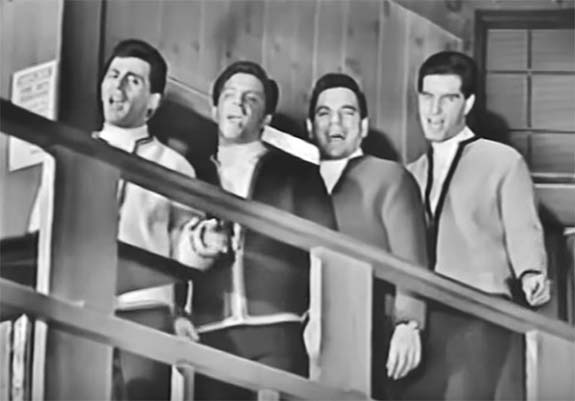
As the song begins, we learn that Valli's significant other is looking to "call it quits," but the falsetto-crooning frontman of The Four Seasons makes his case by pointing to the diamond ring on her finger.

He sings, "That little chip of diamond on your hand / Ain't a fortune, baby, but you know it stands (for the love) / A love to tie and bind us (such a love) / We just can't leave behind us / Baby (don't you go) / Baby (oh no no) / Baby, stay-ay."

Composed by Bob Crewe, Sandy Linzer and Denny Randell, "Let's Hang On!" was one of The Four Seasons' most memorable tunes, ascending to #3 on the U.S. Billboard Hot 100 singles chart. Sixteen years later, Barry Manilow released his rendition of the song, but it only got to #32 on the Hot 100 chart.

According to music historians, the popularity of "Let's Hang On!" stems from several unique devices in the arrangement.

The first is Valli's three-line introduction: "There ain't no good in our goodbye-in' / True love takes a lot of tryin' / Oh I'm cryin'."

The next is the use of two fuzz guitars (with one musician playing high notes and the other playing low notes).

Still another is Valli's extreme falsetto, and the last is the use of backing vocals that provide counterpoint to Valli's main phrasing.

Founded in 1960, The Four Seasons included four Newark, N.J., natives: Bob Gaudio, Frankie Valli, Tommy DeVito, and Nick Massi. The origins of the group are chronicled in the long-running Broadway musical, Jersey Boys.

The Four Seasons were inducted into the Rock and Roll Hall of Fame in 1990 and are credited with selling more than 100 million records. The 85-year-old frontman is still touring, with upcoming stops in Thousand Oaks, CA; Windsor, Ontario; Orillia, Ontario; Las Vegas, NV; Philadelphia, PA; New York, NY; Kingston, NY; and Port Chester, NY.

Trivia: Frankie Valli's real name is Frank Castelluccio. The inspiration for his stage name came from the female country singer Texas Jean Valley.

Please check out the audio track of Frankie Valli and The Four Seasons singing "Let's Hang On!". The lyrics are below if you'd like to sing along...

"Let's Hang On!"
Written by Bob Crewe, Sandy Linzer and Denny Randell. Performed by Frankie Valli and The Four Seasons.

There ain't no good in our goodbye-in'
True love takes a lot of tryin'
Oh I'm cryin'

Let's hang on to what we've got
Don't let go, girl, we've got a lot
Got a lot of love between us
Hang on, hang on, hang on to what we got
Dooh doo, dooh doo, dooh doo

You say you're gonna go and call it quits
Gonna chuck it all and break our love to bits (breaking' up)
I wish you'd never said it (breakin' up)
Oh no, we'll both regret it

That little chip of diamond on your hand
Ain't a fortune, baby, but you know it stands (for the love)
A love to tie and bind us (such a love)
We just can't leave behind us
Baby (don't you go)
Baby (oh no no)
Baby, stay-ay

Let's hang on to what we've got
Don't let go, girl, we've got a lot
Got a lot of love between us
Hang on, hang on, hang on, to what we've got
Dooh doo, dooh doo, dooh doo

There isn't anything I wouldn't do
I'd pay any price to get in good with you (patch it up)
Give me a second turnin' (patch it up)
Don't cool off while I'm burnin'

You've got me cryin' dyin' at your door
Don't shut me out, ooh let me in once more (open up)
Your arms I need to hold you (open up)
Your heart, oh girl I told you
Baby (don't you go)
Baby (oh no no)
Baby, stay

Let's hang on to what we've got, girl
Don't let go, girl, we've got a lot
Got a lot of love between us
Hang on, hang on, hang on, to what we've got
Dooh doo, dooh doo, dooh doo

Credits: Screen capture via Youtube.com.

Wednesday, March 04, 2020

Here’s One More Reason for Proposal Procrastinators to Finally Put a Ring on It

Despite the best of intentions, many young suitors let the winter season slip away without proposing to the loves of their lives. They couldn't gather enough courage on Christmas Day (the single most popular time of the year to pop the question) and missed a wonderful opportunity on New Year's Eve. Then, Valentine's Day came along and, once again, the day passed with no glittering diamond and no pledge of eternal love.

For those needing a little more motivation, the calendar is about to deliver another fabulous reason for lovers to take a deep breath, get down on one knee and change their lives forever. Friday, March 20 is National Proposal Day.

Conceived by John Michael O’Loughlin decades ago as a perfect time for procrastinators to finally ask for their partners’ hand in marriage, National Proposal Day has slowly become an accepted part of our holiday lexicon.

O’Loughlin was motivated to push for this special day after watching his cousin wait years for a proposal that never came. He felt that a day earmarked for proposals would put a fire under some partners who have waited a bit too long to pop the question.

O’Loughlin scheduled National Proposal Day to fall on the first day of spring, which also represents the vernal equinox (the special time of the year when day and night are equal lengths across the globe). O’Loughlin reasoned that the vernal equinox symbolizes “the equal efforts of the two required to comprise the successful marriage.”

(The first day of spring generally falls on March 20, but due to 2020 being leap year, spring will arrive on March 19).

Of course, the autumnal equinox — another perfectly balanced day — carries the same symbolism as the spring version, so there is a second National Proposal Day set for the first day of fall, September 22.

National Proposal Day is promoted as a worldwide event, and O’Loughlin encourages romantic couples to meet up with like-minded friends via social media using #proposalday or #NationalProposalDay.

O’Loughlin clarified that March 20 doesn’t have to end with a proposal. Couples can use it, instead, to spark a conversation about their future together.

WeddingWire’s recently published “Newlywed Report” revealed that 8% of the year's marriage proposals occur during the month of March. We're guessing that a great portion of those will be slated for March 20.

Credit: Image by Bigstockphoto.com.

Monday, March 02, 2020

Stanford Scientists Transform Fossil Fuel Molecules Into Pure Diamond

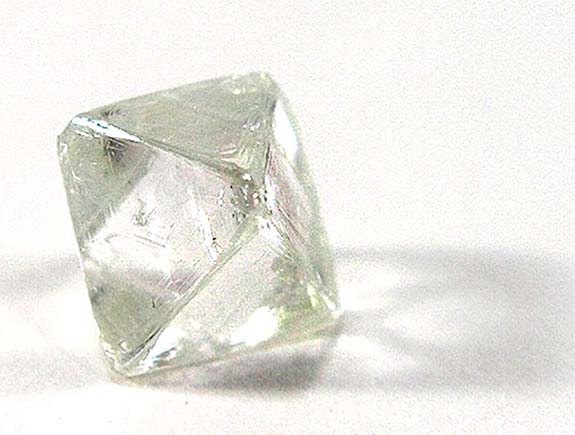
A new study from Stanford University and SLAC National Accelerator Laboratory reveals how — with the right amount of pressure and a modest amount of heat — a substance found in crude oil and natural gas can be transformed into pure diamond. The findings were published February 21 in the journal Science Advances.

“Starting with these building blocks, you can make diamond more quickly and easily, and you can also learn about the process in a more complete, thoughtful way than if you just mimic the high pressure and high temperature found in the part of the Earth where diamond forms naturally,” said Wendy Mao, a Stanford mineral physicist who heads the lab where the study’s experiments were performed.

The research team began with three types of powder refined from petroleum. The odorless, slightly sticky powders resemble rock salt, but with atoms arranged in the same spatial pattern of those that make up diamond crystal. Unlike diamond, which is pure carbon, the powders (called diamondoids) also contain hydrogen.

The diamondoid samples were guided into a small pressure chamber called a diamond anvil cell, which pressed the powder between two polished diamonds. With a turn of a screw, the device mimicked the intense pressure found deep within the Earth. After squeezing the diamondoid samples and blasting them with a laser, a second, cooler laser beam was used to help shape the resulting diamond. Finally, results were examined through a battery of tests and computer models, which helped to explain how the transformation had unfolded.

“A fundamental question we tried to answer is whether the structure, or number of cages, affects how diamondoids transform into diamond,” said study senior author Yu Lin, a staff scientist in the Stanford Institute for Materials and Energy Sciences (SIMES) at SLAC National Accelerator Laboratory. The three-cage diamondoid, called triamantane, was found to reorganize itself into diamond with little energy.

At 1160 degrees Fahrenheit (the temperature of red-hot lava) plus 20 gigapascals, a pressure hundreds of thousands of times greater than Earth’s atmosphere, triamantane’s carbon atoms snap into alignment and its hydrogen scatters, falling away. The transformation was both immediate and direct.

If you can make even small amounts of this pure diamond, then you can dope it in controlled ways for specific applications,” said Lin.

Throughout history, diamond has served as a powerful symbol of love, power, and beauty. Natural diamonds form hundreds of miles beneath the Earth's surface, under extreme heat and pressure that causes carbon to crystalize. Those seen above ground were likely propelled upwards through ancient volcanic eruptions.

For more than 60 years, scientists have been turning various substances into synthetic diamonds through methods involving massive amounts of energy and time. The Stanford researchers sought to find a simpler method.

“We wanted to see just a clean system, in which a single substance transforms into pure diamond — without a catalyst,” said the study’s lead author, Sulgiye Park, a postdoctoral research fellow at Stanford Earth.

According to the study, the mechanisms for this transformation will be important for scientific and industrial applications. This is because diamond’s physical properties of extreme hardness, optical transparency, chemical stability, and high thermal conductivity make it particularly valuable for medicine, industry, technology and biological sensing.

“What’s exciting about this paper is it shows a way of cheating the thermodynamics of what’s typically required for diamond formation,” said Stanford geologist Rodney Ewing, a co-author on the paper.

The minute sample size inside a diamond anvil cell makes this approach impractical for synthesizing much more than the specks of diamond that the Stanford team produced in the lab, Mao added.

“But now we know a little bit more about the keys to making pure diamonds,” she said.

Credit: Image by Rob Lavinsky, iRocks.com – CC-BY-SA-3.0 / CC BY-SA.

Thursday, February 27, 2020

Short Film Details How Diamond Revenues Empower the People of Botswana

In 1967, diamonds were discovered in the newly independent Republic of Botswana. At the time, the land-locked country in Southern Africa was the third-poorest on the continent, but the wealth and opportunity generated by its gleaming natural resource has propelled it into one of Africa's most successful economies.

The key to that success is that for every $1 of diamonds sold, about 80 cents goes back to the government of Botswana. The revenues generated by minerals are put into a central pool and used for the betterment of the country and its people.

Botswana's success story is documented in a short film titled “Fashionscapes: The Diamonds of Botswana." In the film, Livia Firth, co-founder and creative director of Eco-Age, learns first-hand about the impact of diamond mining in a country that has unearthed some of the world's most precious stones, including two diamonds larger than 1,000 carats.

The viewer learns that every person in Botswana is literally a product of the diamond industry.

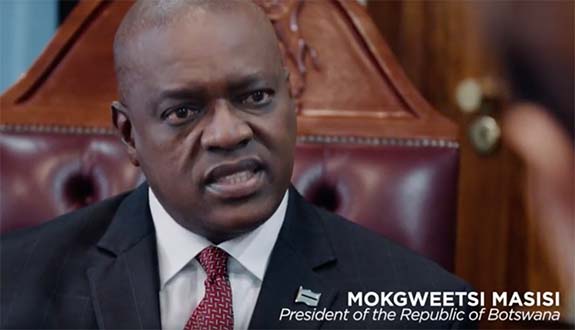
Mokgweetsi Masisi, President of the Republic of Botswana, described how the people of Botswana are critical stakeholders in the business relationship between the mining company and the government. Masisi also acknowledged that diamonds are a finite resource, so building infrastructure and diversifying is a key to future success.

"You only realize excellence through a lot of hard work and that is why we are so keen to diversify," he said. "That's why we are so keen to improve the value chain. And that's why we are so keen to ensure that we unlock more value domestically for our people. So ethics are critical, environmental stewardship is critical. Human rights and workers' rights are critical."

He noted that the distribution of diamond wealth in his country is a "blueprint of excellence."

"What you actually do with the proceeds is telling of who you are and the values you hold," he continued. "Look around. We do have challenges, but we admit them and we want to face them head on."

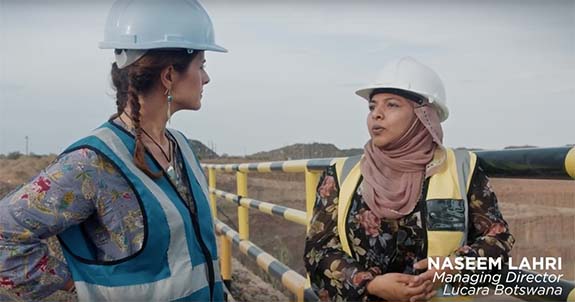
As the first-ever female managing director of the Korowe mine in Botswana, Naseem Lahri knows firsthand how diamonds have enriched the lives of her people.

"I was born in Botswana, I was schooled in Botswana, I've gone to university in Botswana and it's all because of the diamonds that have actually created the schools and the employment," she said.

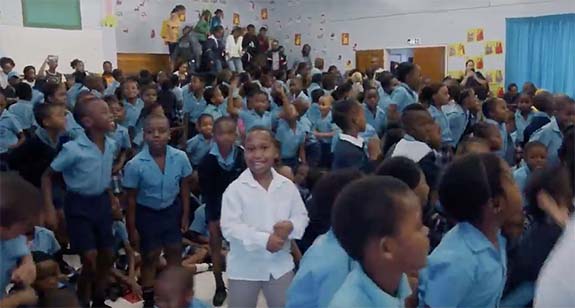
As Firth tours the country, she encounters an agricultural site that provides nutritious fresh food for poorer communities, a public school with enthusiastic students and teachers and an environmentalist who manages a wildlife preserve. All of these entities credit their success to the proceeds generated by the diamond industry.

“Fashionscapes: The Diamonds of Botswana” was produced with the support of the government of Botswana and key players in the country’s diamond industry, including the De Beers Group and mining company Lucara Botswana.

Check out the short film here...

Credits: Screen captures via YouTube.com.

Wednesday, February 26, 2020

Class Ring Lost in Maine 47 Years Ago Is Unearthed in Finland — 4,000 Miles Away

Forty-seven years ago, Debra McKenna lost her boyfriend's high school ring in the bathroom of a Portland, Maine, department store. Shawn's ring was adorned with an oval blue faceted stone and embellished with the tall mast symbol for Morse High School's athletic nickname — the Shipbuilders.

Ironically, the ring was discovered in early February by shipbuilder Marko Saarinen in a densely wooded area near the small town of Kaarina, Finland. The avid metal detectorist located the keepsake under eight inches of soil — about 4,000 miles from where it was originally misplaced.

The markings on the ring provided just enough clues for Saarinen to find the rightful owner. He had the name of the high school, the year of the graduating class and engraved initials inside the band — "S.M." The Finnish Good Samaritan posted a photo of the ring on the Facebook page of Morse High School's Class of 1973.

"Hello from Finland!" his message read. "I was metal detecting in the deep forest and found this high school ring."

Alert followers of the Class of 1973 Facebook page were able to determine that the S.M. initials belonged to Shawn McKenna. The graduating class of barely 200 students included only one male with those initials.

The classmates alerted Debra, who cried when the ring arrived just before Valentine's Day.

Debra and Shawn had met during his senior year and tied the knot in 1977. They were married for 40 years and had three children. In 2017, Shawn passed away after losing a six-year battle with cancer.

Debra said she was shocked by the unbelievable discovery and believes it might be a sign that her husband is still looking after her.

"I was feeling a little lost for a bit, and now I feel like, okay," she told CNN. "He's letting me know that things are good, that the decisions I'm making are right and he's behind me on it. Like he has been through my whole life."

When interviewed by Portland's CBS affiliate WGME-TV, McKenna recounted the day she lost the ring in the bathroom of a local department store. She had set it on the side of the sink while she washed her hands and then forgot to put it back on. Later, when she went back to retrieve it, it was gone.

How and why the ring found its way to a Finnish forest is a mystery that may never be solved.

"I wish it could talk," the 63-year-old McKenna said of the class ring. "I would love to hear the story of how it got from here to there, and if anyone ever knows what it is, I would love to hear what it is. No judgment, just interest."

“It’s very touching in this world of negativity to have decent people step forward and make an effort,” McKenna told the Bangor Daily News. “There are good people in the world, and we need more of them.”

Saarinen, who spends about two hours each week as a metal detector hobbyist, told CNN that he never considered keeping the ring for himself. He was thrilled to mail it back to McKenna.

"This has been an amazing discovery. Best yet," he said.

Credits: Screen captures via WGME-TV.