Wednesday, September 11, 2019

Flawless 10.64-Carat Purplish-Pink Diamond Is Top Lot at Sotheby's HK Auction

An exceptional 10.64-carat flawless vivid purplish-pink diamond is expected to sell for as much as $26 million when it hits the auction block at Sotheby's Magnificent Jewels and Jadeite sale on October 7 in Hong Kong.

In Sotheby's auction catalog, the top lot is described as a cut-cornered rectangular mixed-cut diamond, but it also can be described as a radiant cut, which incorporates the shape of an emerald cut with the faceting array of a round brilliant. The stone is set in an 18-karat white and pink gold ring and is flanked by trapeze-cut white diamonds.

Sotheby's established a pre-sale estimate for the headliner at $20 million to $26 million. If it achieves the high estimate, the diamond's price per carat would be $2.44 million — a number on par with some of the most famous pink diamonds in the world.

For instance, in November 2018, the 18.96-carat “Pink Legacy” was purchased by Harry Winston for $50.3 million, establishing a record price-per-carat for a fancy vivid pink diamond at $2.7 million per carat. The previous record holder was the 14.93-carat "Pink Promise," which sold at a 2017 auction for $2.2 million per carat.

In April of 2017, the 59.6-carat Pink Star — a flawless, fancy vivid pink diamond — shattered the world record for the highest price ever paid for any gem at auction. The Pink Star’s hammer price of $71.2 million at Sotheby’s Magnificent Jewels and Jadeite sale in Hong Kong.

It is believed that pink and red diamonds get their rich color from a molecular structure distortion that occurs as the diamond crystal forms in the earth’s crust. By contrast, other colored diamonds get their color from trace elements, such as boron (yielding a blue diamond) or nitrogen (yielding yellow), in their chemical composition. Pink diamonds larger than five carats are rarely encountered. In fact, fewer than 10% of pink diamonds weigh more than one-fifth of a carat.

Other top lots at Sotheby's Hong Kong auction will include a spectacular ruby ring and a super-size flawless diamond, both of which feature the number "88" in their carat weights. The number 8 is the luckiest number in Chinese culture and is believed to bring good luck and prosperity. With each hundredth of a carat equally 0.002 grams, precision cutting and care was required to finish the polishing of both gems at just the right moment to achieve double eights in the final weight.

Superb Ruby and Diamond Ring. This ring by designer Raymond Yard features an oval Burmese ruby weighing 11.88 carats. The ruby is set in platinum and is accented by various shaped diamonds. The pre-sale estimate is $5.6 to $8.1 million.

A Magnificent Unmounted Diamond. Weighing 80.88 carats, this unmounted D-flawless emerald-cut diamond has excellent polish and symmetry. It is reportedly one of only five emerald-cut diamonds larger than 80 carats to have come up for auction. The gem is graded Type IIa, the most chemically pure of all diamonds. It is expected to sell in the range of $9.9 million to $12.7 million.

Credits: Images courtesy of Sotheby's.

Monday, September 09, 2019

Here's a First Peek at Apple Designer Jony Ive's All-Diamond Ring

Last November, Sir Jony Ive, Apple’s Chief Design Officer, and renowned industrial designer Marc Newson, collaborated on "The (Red) Diamond Ring" — an all-diamond ring that would be honed from a 45-carat rough gem.

The piece — which has no precious metal components — was specially designed to benefit the third (RED) Auction in Miami, a charity supporting AIDS research. An anonymous bidder purchased the ring for $256,250, and the Bill and Melinda Gates Foundation matched 90% of the bid, nearly doubling the total donation.

At the time of the auction, the ring did not exist in real life. However, Ive and Newson promised to custom make an actual ring for the winning bidder in any ring size up to 5. This past Friday, the ring was finally revealed.

The Diamond Foundry, which supplied the lab-grown diamond for the project, announced on Twitter that the ring was completed, and released a video showing how it was meticulously carved and faceted using laser beam and water jet technology. The ring was created by removing material rather than adding it. The original blueprint boasted 2,000 to 3,000 individual facets. A typical round brilliant-cut diamond has 58 facets.

According to the company, the shape and model of the finished stone are revolutionary since there were no guidelines. The Antwerp-based cutters had to create it from scratch using custom tools that had to be ordered from a specialized diamond tools supplier in Belgium.

Ive is reportedly leaving Apple this year to form a new design company called LoveFrom. He has been with Apple for 30 years.

Shawish Geneva was the first company to form a ring from a single diamond. Shawish unveiled the innovative ring to the public during the 2012 Baseworld Watch and Jewelry Show. That ring was laser-cut from a 150-carat rough diamond. While the Shawish ring was groundbreaking, the Ive-Newson design is said to be more wearable.

Credits: Screen captures from Diamond Foundry video.

Friday, September 06, 2019

Music Friday: 'Two Princes' (One With Pockets Full of Diamonds) Vie for Same Girl

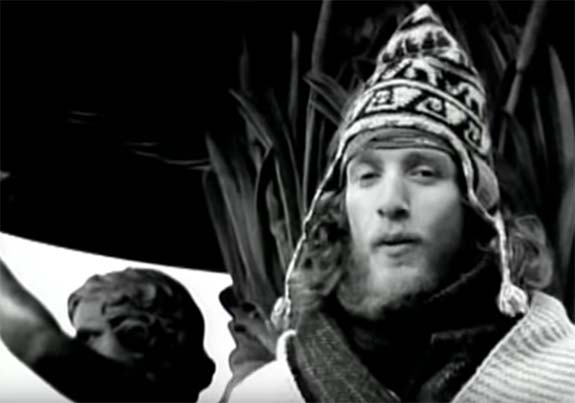
Welcome to Music Friday when we bring you hit songs with jewelry, gemstones or precious metals in the title or lyrics. Today, Spin Doctors frontman Chris Barron portrays one of the title characters of the group's 1993 smash hit, "Two Princes."

In the song, Barron and a rival prince are vying for the affection of the same woman. Barron finds himself outmatched by a prince that has diamonds in his pockets. Barron, who claims to have no future or family tree, can only buy her rockets. It's not clear if the rockets refer to fireworks or the figurative idea of an exciting, intense relationship.

He sings, "One, two princes kneel before you / That's what I said now / Princes, princes who adore you / Just go ahead now / One has diamonds in his pockets / That's some bread, now / This one said he wants to buy you rockets / Ain't in his head, now."

Adding to the drama is Barron's impression that if she marries the rich prince her father will condone her. If she marries him, her father will disown her.

Interestingly, Barron wrote the song as a 19-year-old, in 1987, after leaving Bennington College as a freshman. He returned to his hometown of Princeton, N.J., where he worked in a restaurant and started to hone his writing talent. Sitting at the top of the stairs near his rented room, the young man — a fan of wizards, kings and fantasy fiction — jotted down the first lines of the song on a yellow legal pad: "One, two princes kneel before you / Princes, princes who adore you."

At first blush, he felt the lines were stupid. But then he had second thoughts. He was developing a daily writing technique that allowed for the separation between his creative voice and his editing voice.

"The creative voice is just this toddler, who’s running around finger-painting and sticking his finger in an electric socket," he told insidehook.com, "and the editing voice is the bouncer at the bar who throws everybody out at the end of the night." In the beginning, he explained, you want to turn the volume down on the editing voice.

He decided to keep the odd lyrics and his hunch was right. People "went nuts" for the song, according to Barron.

Six years later, "Two Princes" would become the Spin Doctors' biggest hit, reaching #7 in the US, #2 in Canada and #3 in the UK. It also earned the band a Grammy for "Best Rock Performance by a Duo or Group."

The Spin Doctors have been together for more than 30 years and continue to tour. The band members estimate that they've performed nearly 2,000 shows. A seventh studio album is in the works.

Trivia: In 1988, Barron and Spin Doctors guitarist Eric Schenkman originally teamed with John Popper (Blues Traveler) and called themselves the Trucking Company. When Popper left his part-time gig with the band to focus on Blues Traveler, the remaining band members rebranded themselves as the Spin Doctors, adding Aaron Comess (drums) and Mark White (bass guitar) by the spring of 1989.

Please check out the video of Chris Barron and the Spin Doctors performing "Two Princes." The lyrics are below if you'd like to sing along...

"Two Princes"
Written by Chris Barron, Mark White, Eric Schenkman and Aaron Comess. Performed by Spin Doctors.

One, two princes kneel before you
That's what I said now
Princes, princes who adore you
Just go ahead now
One has diamonds in his pockets
That's some bread, now
This one said he wants to buy you rockets
Ain't in his head, now

This one he got a princely racket
That's what I said now
Got some Big Seal upon his jacket
Ain't in his head now
You marry him, your father will condone you
How 'bout that now
You marry me, your father will disown you
He'll eat his hat, now

Marry him or marry me
I'm the one that loved you baby can't you see?
Ain't got no future or family tree
But I know what a prince and lover ought to be
I know what a prince and lover ought to be

Said if you want to call me baby
Just go ahead now
And if you like to tell me maybe
Just go ahead now
And if you want to buy me flowers
Just go ahead now
And if you like to talk for hours
Just go ahead now

Said one, two princes kneel before you
That's what I said now
Princes, princes who adore you
Just go ahead now
One has diamonds in his pockets
And that's some bread, now
This one who wants to buy you rockets
Ain't in his head, now

Marry him or marry me
I'm the one that loved you baby can't you see?
Ain't got no future or family tree
But I know what a prince and lover ought to be
I know what a prince and lover ought to be

Said if you want to call me baby
Just go ahead now
And if you like to tell me maybe
Just go ahead now
And if you want to buy me flowers
Just go ahead now
And if you like to talk for hours
Just go ahead now
And if you want to call me baby
Just go ahead now
And if you like to tell me maybe
Just go ahead now
And if you like to buy me flowers
Just go ahead now
And if you like to talk for hours
Just go ahead now
If you want to call me baby
Just go ahead now
And if you like to tell me maybe
Just go ahead now
If you want to buy me flowers
Just go ahead now
And if you like to talk for hours
Just go ahead now
Oh Baby!
Just go ahead now
Oh!
Just just go ahead now
Oh, your majesty!
Just go ahead now
Come on forget the King who... marry me!
Just go ahead now
Come on, come on, come on
Just go ahead now
Go ahead now
Just go ahead now

Credit: Screen capture via YouTube.com.

Wednesday, September 04, 2019

Padparadscha Is the Rarest and Most Valuable Variety of September's Birthstone

Characterized as “a true Rembrandt among gemstones,” the pinkish-orange padparadscha is the rarest and most valuable variety of September's birthstone — sapphire.

Padparadscha belongs to the corundum family of gemstones, which includes rubies and sapphires. The presence of trace elements determines the color of each gemstone. While blue sapphires are naturally colored with iron and rubies with chromium, padparadschas are colored by the presence of both. The delicate interplay of pink and orange hues make this gem one of nature’s greatest achievements.

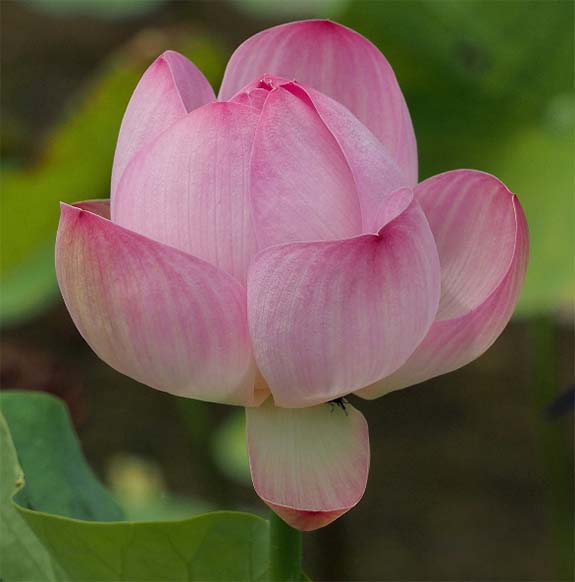
The gem’s name is derived from “padma raga,” which literally means “the color of the lotus flower” in Sanskrit.

The specimen, above, is the largest and finest example of padparadscha in the National Gem Collection at the Smithsonian in Washington, D.C. Weighing 5.51 carats, the gem was a gift from Pasha and Laney Thornton and has been part of the collection since 2002.

According to the Smithsonian, when a sapphire is not blue it is considered "fancy color." Some of the most common fancy-colored sapphires are yellow, pink and purple. The most coveted is the pinkish-orange padparadscha.

Back in 2013, a gemstone dealer told author and gemstone expert David Federman, “Fine padparadscha is far rarer than either fine Kashmir sapphire or Burma ruby. We’re talking about a true Rembrandt among gemstones.”

Padparadscha earned a splash of attention in January of 2018 when Princess Eugenie, the granddaughter of Queen Elizabeth II, received an oval padparadscha engagement ring from her long-time boyfriend Jack Brooksbank.

In a BBC interview, Brooksbank, explained what led him to this unconventional choice.

“What’s amazing about it and why I love it so much is that it changes color from every different angle that you look at it,” he said. “And that’s what I think of Eugenie. That she changes color.”

Credit: Padparadscha by Greg Polley / Smithsonian. Lotus flower by Greg Peterson [CC BY-SA 3.0], via Wikimedia Commons.

Tuesday, September 03, 2019

Artist Diemut Strebe Will Make a 16.78-Carat Yellow Diamond Disappear in NYC

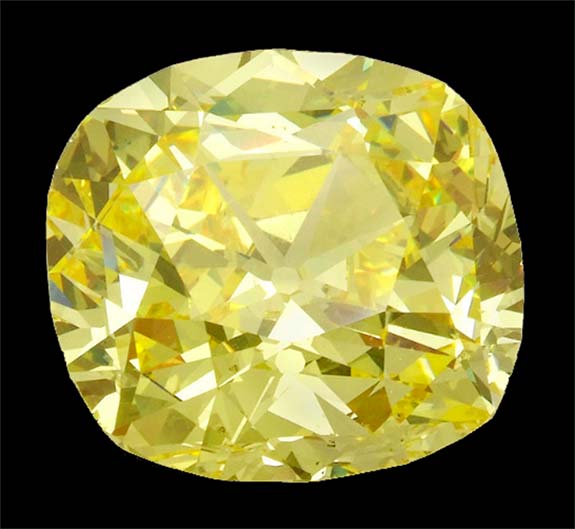
Utilizing state-of-the-art technology that mimics the visual effects of a black hole, artist Diemut Strebe plans to make a $2 million, 16.78-carat yellow diamond disappear at the New York Stock Exchange on September 13.

The normally colorful and reflective diamond will be reduced to a flat black spot.

To pull off her stunning illusion, Strebe has teamed up with scientist Brian Wardle of the Massachusetts Institute of Technology, where Strebe is the artist-in-residence. Wardle is credited with developing a substance made of carbon nanotubes that absorbs 99.965% of light, creating the blackest black material on earth.

With the diamond shrouded in this material, it will cast no shadows and lose dimensionality — rendering it virtually invisible to the naked eye. It's the closest thing to experiencing a black hole on earth. With no light reflected back from the object, one's brain paints it as pure black.

Interestingly, the diamond and its nanotube shroud are both composed of the same element — carbon — but present the opposite extremes when exposed to light. Diamonds are extraordinarily reflective, while the carbon nanotubes are unusually light-absorptive.

A few years ago, "Vantablack" made news when it was introduced as a carbon nanotube-based material that absorbed 99.6% of light.

The sole right to use Vantablack was acquired by British sculptor Anish Kapoor, which sparked a controversy among other artists who wished to work with it. Since then, Wardle developed a different composition of carbon nanotubes, which will be available for any artist to use.

Strebe's art installation, called "The Redemption of Vanity," will be on view at the New York Stock Exchange from September 13 to November 25. It will be presented in coordination with the MIT Center for Art, Science & Technology (CAST), the MIT Department of Aeronautics and Astronautics and the MIT necstlab.

See CNN's November 2017 coverage of the "darkest thing on Earth" at this link...

Credits: Yellow diamond by MJT Symbolic [CC BY-SA 4.0], via Wikimedia Commons. NYSE by Kamel15 [CC BY-SA 3.0], via Wikimedia Commons. Screen captures via YouTube.com/CNN.