Monday, April 29, 2019

Lucara Recovers 1,758-Carat Diamond at Karowe Mine; It's the Second-Largest Ever

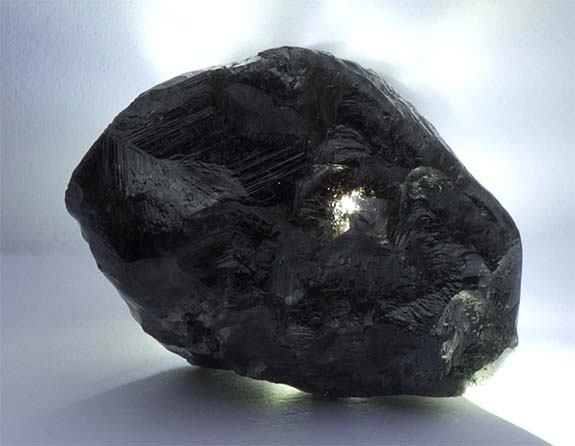
Lucara Diamond Corp. has unearthed a tennis-ball-size 1,758-carat diamond at its famous Karowe Mine in Botswana. The diamond rates as the second-largest ever found, easily overtaking the 1,109-carat Lesedi La Rona, which was also recovered at Karowe.
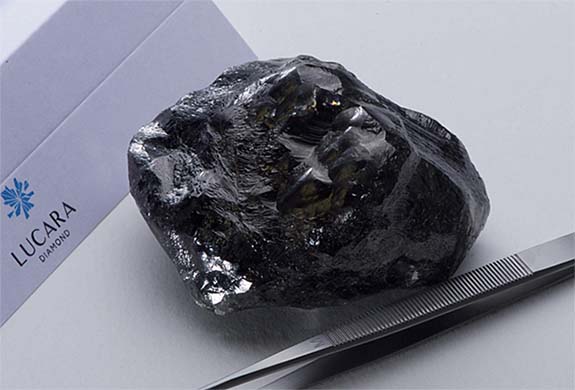
But, unlike the gem-quality Lesedi La Rona, which was purchased by diamantaire Laurence Graff for $53 million and recently cut into 67 high-quality diamonds, Lucara's newest find is being characterized as "near" gem quality with "domains of high-quality white gem."

Looking closely at the photo, above, one can see a sharp transition from grey-black to silver-white in the lower left portion of the rough diamond. Lucara reported that further detailed analysis is ongoing.
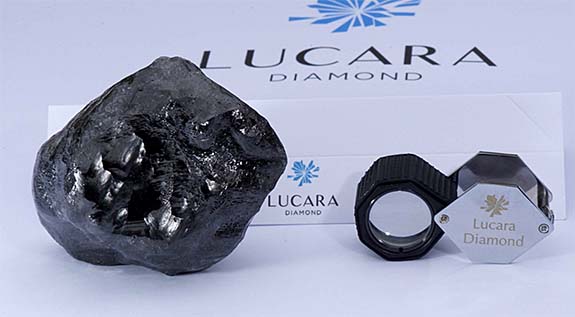
Weighing more than three-quarters of a pound, the recently recovered stone measures 83mm x 62mm x 46mm and managed to get through Lucara's diamond sorting process without breaking.
Lucara CEO Eira Thomas said the diamond remained unscathed during the recovery thanks to the company's state-of-the-art XRT circuit, which was commissioned in 2015.

Throughout history, diamond-bearing rock was typically drilled, blasted, hauled and put through crushing machines to get to the gems that may be hiding within. During that process, extremely large diamonds, some weighing hundreds of carats or more, were often damaged or even pulverized.

With the advent of XRT scanners, the mining process is becoming kinder and gentler. As the rocky material comes down a conveyor belt, the scanners can pick out the diamonds based on their chemical composition. Older scanners used to depend strictly on the stone’s ability to reflect light.

The diamond-rich material is then separated from the rubble and moved to a secure area for processing.

Since going online with the XRT circuit in 2015, a total of 12 diamonds larger than 300 carats have been recovered at Karowe, including two greater than 1,000 carats, from a total production of approximately 1.4 million carats. Of the 300-plus-carat diamonds recovered, 50% were categorized as gem quality with 11 sold to date generating more than $158 million.

Thomas is confident that more large, high-quality diamonds will be discovered as the company mines deeper in the orebody and gains access to geologically favorable material.

The largest diamond ever recovered is the 3,106-carat Cullinan, which was found at South Africa's Premier Mine 2 in 1905. The high-quality rough stone was cut by the Asscher Company into nine principal diamonds and 96 smaller diamonds. The Cullinan I and II – known as the Great Star of Africa and the Lesser Star of Africa — are set in the Crown Jewels of Britain. They weigh 530 carats and 317 carats, respectively. The remaining seven principal diamonds — ranging in size from 94 carats to 4.39 carats — are in the collection of Queen Elizabeth II.

Credits: Images courtesy of Lucara Diamond Corp.

Friday, April 26, 2019

Music Friday: 'Daddy's Little Girl' Is a Precious Gem, Sings Michael Bolton

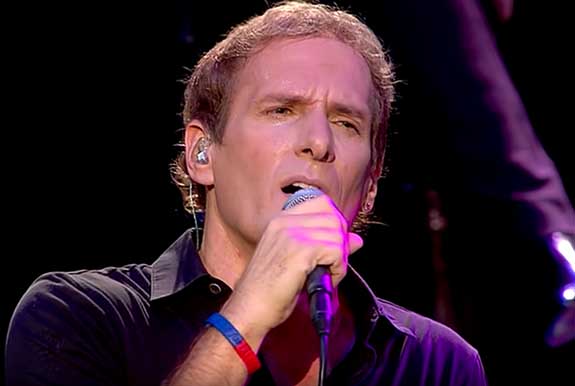
There are few things in life more sentimental than the father/daughter dance at a wedding, and one of the top tunes for that time-honored tradition is the subject of today's Music Friday treat. Welcome to our weekly review of songs with jewelry, gemstones or precious metals in the title or lyrics. In Michael Bolton's sweet 2003 rendition of "Daddy's Little Girl," the singer describes his daughter as a precious gem.

In the very first verse he sings, "You're the end of the rainbow, my pot of gold / You're Daddy's little girl to have and hold / A precious gem is what you are / A ray of hope, a shining star."

Bolton, incidentally, is the proud papa to three daughters: Isa, Holly and Taryn.

Originally written by Robert Burke and Horace Gerlach exactly 70 years ago, the sing-along ditty has stood the test of time. Made famous by The Mills Brothers in 1950, "Daddy's Little Girl" was revived by Frank Fontaine in 1963 and Al Martino in 1967. Thirty-five years later, in 2002, Michael Bublé featured the song on his Dream album, and a year later the song became the eighth track on Bolton's Vintage album.

The endearing song is still played by DJs at wedding receptions from coast to coast. In fact, iHeartRadio rated it #8 on its list of the "30 Father/Daughter Wedding Dance Songs Perfect for Your Big Day."

Born Michael Bolotin in New Haven, Conn., in 1953, Bolton earned his reputation as one of the top pop-rock balladeers of his generation with mega-hits, such as "How Am I Supposed to Live Without You" (1989) and "When a Man Loves a Woman" (1991).

During his career, he's sold more than 75 million records and charted eight Top-10 albums. He's earned two Grammy Awards and six American Music Awards.

Please check out the audio clip of Bolton singing "Daddy's Little Girl." The lyrics are below if you'd like to sing along...

"Daddy's Little Girl"
Written by Robert Burke and Horace Gerlach. Performed by Michael Bolton.

You're the end of the rainbow, my pot of gold
You're Daddy's little girl to have and hold
A precious gem is what you are
A ray of hope, a shining star.

You're a bright as the sunshine, morning's first light
You warm my day and brighten my night
You're sugar, you're spice, you're everything nice
and you're Daddy's Little Girl.

A precious gem that's what you are
A ray of hope, a shining star.

You're a bright as the sunshine, morning's first light
You warm my day and brighten my night
You're sugar, you're spice, you're everything nice
and you're Daddy's little girl.

Credit: Screen capture via YouTube.com.

Wednesday, April 24, 2019

At Topaz Mountain in Utah, Amateur Prospectors Get to Keep What They Find

Gem lovers looking for a rustic adventure a little off the beaten path may consider a trip to Topaz Mountain in Utah, where amateur prospectors get to keep whatever they find.

Located about 120 miles southwest of Provo, the Topaz Dome Quarry in Utah's Thomas Range has long been a popular destination for hardcore rockhounds. But, four years ago, Richard Pyne, David Stemmons and their partners established Topaz Mountain Adventures, which allows novices to join in on the fun.

"Our philosophy was to make the premium stuff available to the public," Stemmons told ksl.com. "So we do blasting tours and take you right up to the rock. We don’t keep any of it. Whatever you find is yours to keep.”

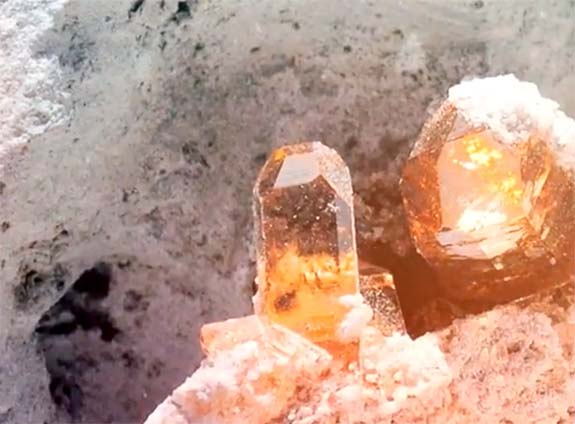
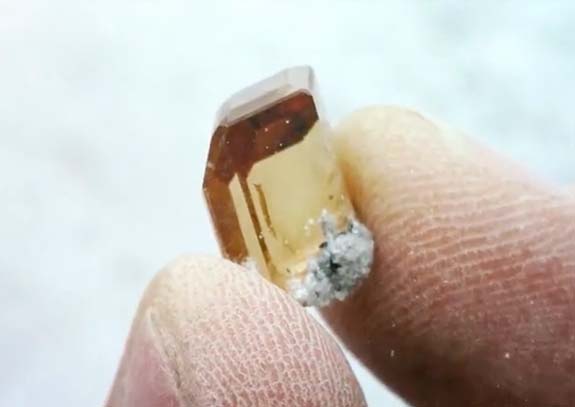
Among the treasures at the blast site are many varieties of Utah Topaz and other collectible minerals, such as Bixbyite, a black crystal made from manganese iron oxide. Topaz colors range from a bright amber to a deep sherry.

Pyne explained that Utah Topaz is sensitive to UV light (the type emitted by the sun). Once exposed, the vibrant color can fade to clear. For that reason, the tour operator sells UV-light reflective bags and warns prospectors to keep their precious finds out of the sunlight.

The property that Topaz Mountain Adventures has leased from the state of Utah is adjacent to free public lands also used for prospecting. The difference is that the public lands are very hard to work.

The $30 tours at Topaz Mountain Adventures run for four hours and prospectors can expect to leave the site with a handful of nice specimens, according to Pyne. Tool rentals are available and the staff is happy to assist visitors in identifying what they've found.

According to Pyne, it's not uncommon for a visitor to return to Topaz Mountain Adventures for more easily accessible treasures after working a full day at a free public site and coming up empty.

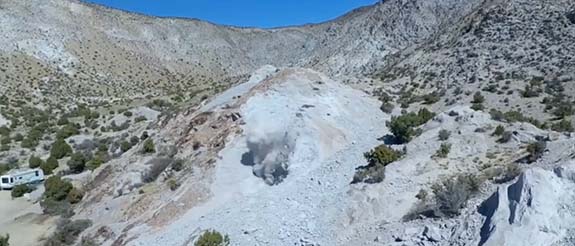
Topaz Mountain Adventures also offers a premium package at $649, which allows a group of up to eight prospectors to witness an actual blast (seen above) and get first dibs on the treasure found in the freshly exposed rock.

The blast site is 47 miles from the nearest town, and Pyne advised visitors to bring plenty of water and to dress in layers. Spring and fall are the best seasons for prospecting, although temperatures can range from 40 degrees Fahrenheit in the morning to 80 degrees in the afternoon. High temps in July and August can get to 110 degrees.

You can learn more at topazmountainadventures.com.

Credits: Images courtesy of Topaz Mountain Adventures.

Monday, April 22, 2019

Botswana's 20.46-Carat 'Okavango Blue' Diamond Is Called a 'Once-in-a-Lifetime Find'

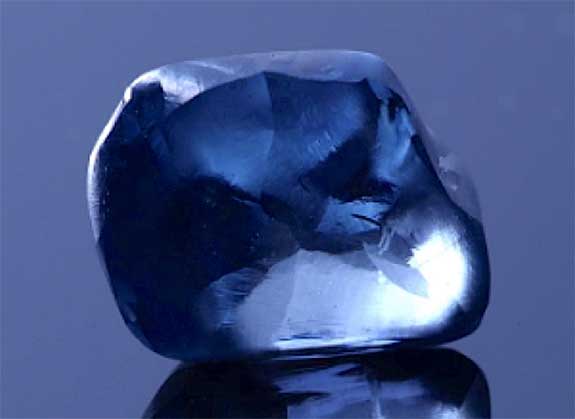
The largest blue diamond ever discovered in Botswana — a brilliant 20.46-carat oval gem with Fancy Deep Blue color and VVS2 clarity — was unveiled last week by the state-run Okavango Diamond Company.

"It is incredibly unusual for a stone of this color and nature to have come from Botswana. [It's] a once-in-a-lifetime find," said Okavango's managing director Marcus ter Haar.

The gem, which was cut from a 41.11-carat rough diamond sourced at the Orapa mine, was named "The Okavango Blue" to honor the world heritage site known as the Okavango Delta. The lush delta is the home to hippos, elephants, crocodiles, lions, leopards, giraffes and rhinos.

Okavango Diamond Company will be promoting The Okavango Blue in the lead-up to its sale at the end of 2019. While the company did not reveal what The Okavango Blue might be worth, a similar diamond sold at a Christie's auction in 2016 may hold the answer.

The Cullinan Dream, a 24.18-carat intense blue diamond with a VS2 clarity rating, sold for $25.4 million at Christie's New York in June of 2016. Based on that performance, one might presume The Okavango Blue has the potential to yield about $1 million per carat.

“From the first moment we saw the diamond, it was clear we had something very special,” said the managing director. “Everyone who has viewed the 20-carat polished diamond has marveled at its unique coloration, which many see as unlike any blue stone they have seen before.”

Blue diamonds are extraordinarily rare, owing their color to trace amounts of boron in the diamond crystal lattice.

Despite its tiny size, Botswana is one of the world's leading producers of top-quality diamonds. Botswana's Karowe mine, for instance, was the source of the 1,109-carat Lesedi la Rona — the second-largest rough diamond ever discovered. Diamonds are Botswana's main source of income and account for about 80% of its exports. Okavango Diamond Company is responsible for marketing 15% of the country's diamond production.

"Consumers can purchase Botswana diamonds with a sense of pride knowing that these diamonds are improving the lives of the people of Botswana,” said Okavango chief financial officer Lipalesa Makepe.

Credits: Images courtesy of Okavango Diamond Company.

Friday, April 19, 2019

Music Friday Flashback: Silver Locket 'Bears the Name of the Man That Brandy Loved'

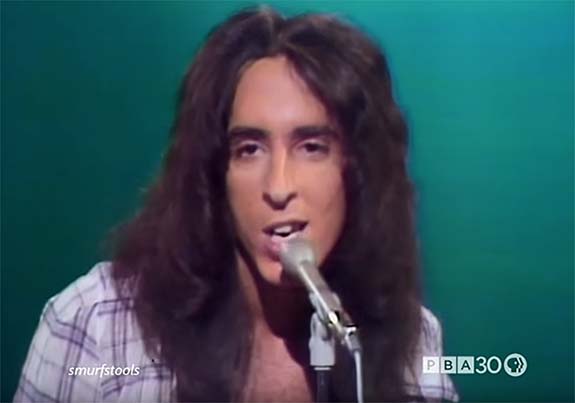
Welcome to Music Friday when we bring you throwback songs with jewelry, gemstones or precious metals in the title or lyrics. Today, Elliot Lurie and the Looking Glass perform their 1972 chart-topper, "Brandy," a song about a barmaid in a harbor town who wears a very sentimental piece of neckwear as a constant reminder of the sailor who won her heart.

Lurie sings, "Brandy wears a braided chain / Made of finest silver from the North of Spain / A locket that bears the name / Of the man that Brandy loved."

Brandy fell in love with the sailor on a summer day when he arrived with gifts from far away. But, he also made it clear that he couldn't stay because no harbor could be his home. He tells Brandy that his life, his lover, his lady is the sea.

Since its release in the early 1970s, "Brandy" has been the subject of a spirited debate. Some music historians speculated that the hapless heroine, Brandy, is based on the legend of Mary Ellis, a New Jersey spinster who fell in love with a sea captain in the late 18th century.

She was promised marriage, and Ellis waited for her captain until her death, but he never returned. This story may have caught the ears of four students of Rutgers University, which is just two miles from Mary Ellis’s final resting place. These students ultimately became the founding members of the Looking Glass in 1969.

The story sounds compelling, but Lurie, who penned the tune, has refuted any link to Mary Ellis. The song, he said, is based on the name of his high school sweetheart, "Randy."

"Brandy" soared straight to #1 on the U.S. Billboard Hot 100 chart and has been used in the soundtracks of numerous films, including Charlie's Angels (2000).

Interestingly, "Brandy" was originally buried on the "B" side of the Looking Glass song, "Don't It Make You Feel Good." The group has to thank Washington, D.C., program director Harv Moore for giving the "B" side heavy airplay and creating a phenomenon that would spread nationwide.

Moore noted that when the Top 40 station WPGC AM/FM started playing "Brandy" in one-hour rotations for two days, "the switchboard lit up like a Christmas tree."

Please check out the video of the Looking Glass performing "Brandy." The lyrics are below if you'd like to sing along...

"Brandy (You're a Fine Girl)"
Written by Elliot Lurie. Performed by The Looking Glass.

There's a port on a western bay
And it serves a hundred ships a day
Lonely sailors pass the time away
And talk about their homes

And there's a girl in this harbor town
And she works layin' whiskey down
They say, Brandy, fetch another round
She serves them whiskey and wine

The sailors say: "Brandy, you're a fine girl" (you're a fine girl)
"What a good wife you would be" (such a fine girl)
"Yeah, your eyes could steal a sailor from the sea"

Brandy wears a braided chain
Made of finest silver from the North of Spain
A locket that bears the name
Of the man that Brandy loved

He came on a summer's day
Bringin' gifts from far away
But he made it clear he couldn't stay
No harbor was his home

The sailors say: "Brandy, you're a fine girl" (you're a fine girl)
"What a good wife you would be" (such a fine girl)
"But my life, my lover, my lady is the sea"

Yeah, Brandy used to watch his eyes
When he told his sailor stories
She could feel the ocean fall and rise
She saw its ragin' glory
But he had always told the truth, Lord, he was an honest man
And Brandy does her best to understand

At night when the bars close down
Brandy walks through a silent town
And loves a man who's not around
She still can hear him say

She hears him say "Brandy, you're a fine girl" (you're a fine girl)
"What a good wife you would be" (such a fine girl)
"But my life, my lover, my lady is the sea"
It is, yes it is,
He said, "Brandy, you're a fine girl" (you're a fine girl)
"What a good wife you would be" (such a fine girl)
"But my life, my lover, my lady is the sea"

Credit: Screen capture via YouTube.com.